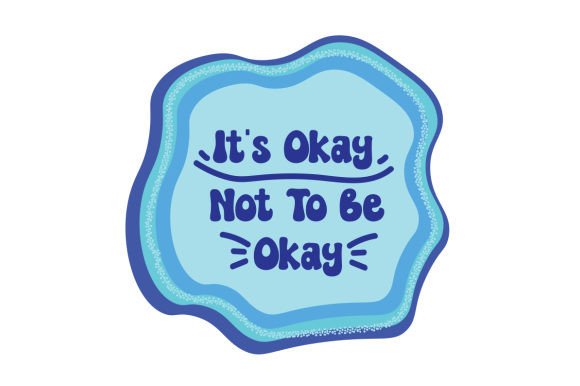
Review: It's Okay Not to Be Okay Sticker for Kids
As a designer who spends more time staring at stitch maps than most people spend on their phones, I approach every new machine embroidery design with a mix of curiosity and skepticism. We've all been there: you download a file that looks perfect on the screen, only to find out it's a tangled mess of underlay or impossible lettering once it hits the hoop. Recently, I got my hands on the It s Okay Not to Be Okay - Mental Health Round Sticker, for Kids to evaluate its potential for real-world application. This isn't just about whether the lines are smooth; it's about whether this design can carry the weight of the message it conveys when translated into thread.
The first thing that strikes me about this digital embroidery file is its mood. Mental health awareness has moved from the fringe to the forefront of modern parenting and education, especially within the School Amp environment where emotional literacy is becoming as important as math or reading. The round format suggests a badge of honor or a gentle reminder, which fits the theme perfectly. Visually, the layout feels balanced, avoiding the clutter that often plagues text-heavy designs. For those of us running a craft business or selling on Etsy, the visual personality here is key—it needs to look professional enough for a boutique but approachable enough for a child's backpack.
Putting the Design to the Test: A Real-World Scenario
To truly understand the value of this asset, I imagined a specific project: a custom order for a local elementary school counselor who wanted to create care packages for students returning after a break. The goal was to produce a small run of embroidered tote bags and sweatshirts. This is where the It s Okay Not to Be Okay - Mental Health Round Sticker, for Kids really shines. When I visualized this design stitched onto a canvas tote bag design, the circular shape worked exceptionally well centered on the pocket or the main panel. It doesn't fight the geometry of the bag; instead, it anchors the look.
However, moving from visualization to execution requires looking at the technical details. Since this product is categorized under Crafts and intended for kids, durability and comfort are non-negotiable. If you are planning sweatshirt embroidery, you need to consider how the stitch density interacts with fleece or French terry cloth. A design that is too dense can make the fabric stiff and uncomfortable against a child's skin. My advice? Always test the design on scrap fabric that matches your final material. Check the back of the stitching. If the stitch density is too high, you might need to adjust your machine settings or choose a lighter weight stabilizer to prevent puckering.
Navigating Fabric Choices and Stitching Clarity
One of the critical aspects of reviewing any embroidery file is determining where it should be used carefully. The phrase "It's Okay Not to Be Okay" relies heavily on legibility. If the lettering is too small or the thread colors lack contrast against the background, the message gets lost. On dark fabrics, you must ensure the design includes appropriate underlay or plan to use a lighter thread palette to maintain readability. Conversely, on thin or stretchy fabrics like baby onesies, a heavy fill stitch could cause distortion. For baby embroidery projects, I would recommend sizing the design down slightly and ensuring the edges are finished cleanly, perhaps using a satin stitch border if the file allows for modification.
Curved surfaces present another challenge. If you intend to put this on a cap or a structured hat, the round shape is theoretically ideal, but the reality of sewing on a curved plane can distort text. The outer edges of the circle might pull differently than the center. Before committing to a production run of custom apparel or caps, stitch a sample on a similar curved surface. Pay close attention to the corners of the letters. Tiny details often get swallowed up by the thread bulk in these areas. If the design features intricate running stitch details, they might not hold up well on textured towels or waffle-weave kitchen linens.
Commercial Viability and Brand Consistency
For the Etsy seller or the owner of a small shop product line, consistency is everything. This design offers a strong opportunity for brand building around mental wellness. Whether you are creating an embroidered patch to sell individually or applying it directly to garments, the professional finish of the final product reflects directly on your reputation. A clean, well-digitized design builds customer trust. If the stitches are messy or the alignment is off, it undermines the serious nature of the mental health message.
I also considered the versatility of this design for holiday gifts or personalized products. It fits seamlessly into holiday embroidery collections where the focus is on warmth and support rather than traditional festive icons. Imagine this stitched onto a pillow cover for a teen's room or an apron for a family baking day. The emotional resonance adds value beyond the physical item. However, always confirm licensing before selling finished items. While the product description mentions formats like SVG, PNG, EPS, and DXF, which are great for cutting machines and printing, you must verify if the specific embroidery digitization rights are included if you are using this for commercial embroidery projects. Never assume a file meant for crafting is automatically cleared for mass production.
Final Thoughts on Execution
In conclusion, the It s Okay Not to Be Okay - Mental Health Round Sticker, for Kids is a thoughtful addition to any designer's library, provided it is handled with care. It bridges the gap between trendy aesthetics and meaningful messaging. To get the best results, treat it as a collaborative partner in your creative process. Test it in black and white mockups to check contrast. Compare how it looks on light versus dark backgrounds. Ensure your hoop size is appropriate so you aren't fighting the machine to fit the frame.
Ultimately, the success of this embroidery project depends on your attention to detail. By respecting the limitations of the fabric and the capabilities of your machine, you can turn a simple digital asset into a powerful handmade product. Whether it ends up on a school supply bag, a cozy blanket, or a boutique t-shirt, this design has the potential to spark conversations and offer comfort, which is the highest goal of any creator in the crafts industry. Just remember to do your homework on the technical specs, and let the message shine through your stitching.