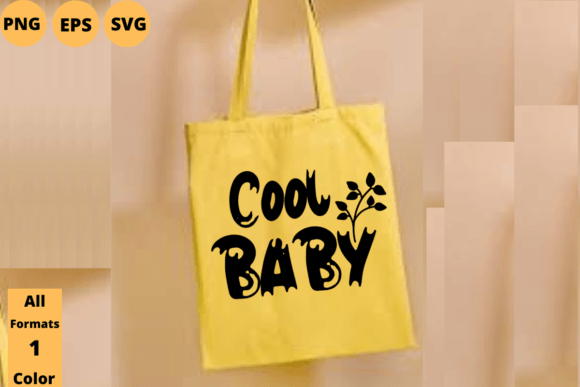
Cool Baby T-shirt Design: A Pro Review for Embroidery Projects
As a designer who spends more time staring at stitch simulations than actual sleep, I approach every new machine embroidery design with a mix of curiosity and skepticism. We've all been there: you download a file that looks adorable on the screen, only to find out it's a nightmare to stitch or lacks the detail needed for a professional finished product. Recently, I took a close look at the Cool Baby T-shirt Design to see if it holds up under the needle for real-world applications. This isn't just about whether it's cute; it's about whether it works for your craft business, your Etsy shop, or that special personalized gift you're making for a friend.
First Impressions and Visual Personality
When I first opened the files included in the Print Templates package, the immediate takeaway was versatility. The design carries a playful yet modern mood, perfect for the current trend of minimalist baby apparel. It doesn't rely on overly complex shading or tiny, fragile details that often break apart after a few washes. Instead, it offers clean lines and a strong silhouette that translates well into thread.
The layout feels balanced, suggesting it was created with an understanding of how thread behaves on fabric. For those of us creating custom apparel, this is crucial. A design that looks good as a vector graphic doesn't always translate to a successful embroidery project. However, the visual personality here suggests it would sit comfortably on a variety of items, from a soft onesie to a structured tote bag. It has that "boutique" feel that customers are willing to pay a premium for, provided the execution is clean.
Real-World Application: The Baby Shower Scenario
To truly test the potential of this asset, I imagined a specific scenario: preparing a set of gifts for a high-end baby shower. The client wanted something unique, not the generic store-bought items. I envisioned using the Cool Baby T-shirt Design on a set of organic cotton bodysuits and a matching muslin swaddle blanket.
In this context, the design shines because it avoids excessive density. Heavy stitching on baby skin is a no-go, and this graphic appears light enough to remain comfortable while still making a visual statement. If you are an Etsy seller looking to expand your baby embroidery line, this type of design is gold. It allows you to offer personalization—perhaps adding a name below the graphic in a complementary font—without overcrowding the garment.
Beyond baby clothes, I could easily see this working as a sweatshirt embroidery pattern for older siblings or even as a central motif on a tote bag design for carrying diaper essentials. The simplicity of the graphic means it won't get lost on textured fabrics like terry cloth or French terry, which are staples in nursery decor and children's fashion.
Technical Considerations for Stitching
Now, let's talk about the technical side, because that's where many designs fail. Since the package includes an EPS File, an SVG File, and a PNG File, it is important to note that these are primarily Graphics and Print Templates. As an experienced reviewer, I must emphasize that if you intend to use this for machine embroidery, you will likely need to digitize these files yourself or ensure you have the appropriate conversion tools, unless the seller provides specific embroidery formats (like PES or DST) which are not explicitly listed in the "What You Get" section.
Assuming you are digitizing this or using a converted version, here is what you need to watch for:
- Stitch Density: When converting the SVG or EPS, be careful not to make the fill areas too dense. For baby items, aim for a lighter coverage to maintain fabric drape.
- Stitch Types: This design lends itself well to a combination of satin stitch for outlines and a light fill stitch for larger areas. Avoid long running stitch segments on stretchy fabrics, as they can pucker.
- Hoop Size: The design appears compact enough for smaller hoops, which is great for cuffs, collar placements, or embroidered patch creation. However, always measure your specific digitized version against your hoop capabilities.
- Fabric Texture: On dark fabrics, you may need to adjust your underlay settings to prevent the background from showing through, ensuring the colors pop as intended.
Navigating Fabric Challenges
Not every fabric plays nice with every design. If you are planning to stitch this onto a stretchy knit for a custom apparel line, stabilization is non-negotiable. A cut-away stabilizer is usually my go-to for garments that will undergo frequent washing, ensuring the design doesn't distort over time.
For curved surfaces like caps, the layout of the Cool Baby T-shirt Design might require some adjustment. Flat graphics can look warped when applied to a curved brim or panel. If you are attempting this, I recommend creating a mockup first. Similarly, for very thin fabrics like voile or lightweight linen, you must check the stitch count. If the design is too heavy, it will weigh down the fabric and ruin the drape of the handmade product.
Commercial Viability and Brand Consistency
For small shop product creators, consistency is key to building trust. This design offers a level of professionalism that can elevate your brand. Whether you are selling holiday embroidery gifts or year-round nursery decor, the clean aesthetic fits well within modern branding strategies.
Using the included PNG File for printable mockups is a smart move before you ever thread a needle. You can place the image on product photos to gauge customer reaction. Does it look premium? Does it fit the vibe of your shop? These digital assets allow you to test the market with zero risk.
However, a word of caution regarding licensing: Always verify the terms before selling finished items or digital products derived from these files. Just because a file is editable doesn't automatically grant commercial rights for resale as a digital embroidery file. Check the specific license agreement to ensure you are compliant, especially if you plan to sell these as design assets to other makers.
Final Verdict and Designer Notes
The Cool Baby T-shirt Design is a solid contender for anyone looking to add fresh, modern graphics to their repertoire. Its strength lies in its adaptability and clean visual language. It feels less like a clipart afterthought and more like a deliberate piece of art ready for textile application.
Before you commit to a full production run, follow these practical steps:
- Test on Scrap: Always stitch a sample on the exact fabric you plan to use. Thread tension and fabric pull can vary wildly.
- Check Contrast: Review how the design looks in black and white. If it loses definition without color, you may need to adjust your thread choices or digitizing parameters.
- Inspect Details: Zoom in on the small corners and curves. Are they sharp enough? Do they need additional tie-offs?
- Confirm Formats: Since the package lists EPS, SVG, and PNG, ensure you have the workflow to convert these to your machine's native format if necessary.
In conclusion, this design has the potential to be a staple in your library of commercial embroidery projects. With the right preparation and attention to fabric compatibility, it can help you create personalized gifts and products that customers will cherish. It's a reminder that great embroidery starts with a great design, but finishes with skilled execution.